

What does turning AI First really mean, and how does it impact us, teams & customers
The latest thoughts about an AI First Approach

The tech world loves a good buzzword, right? We've had "cloud," "big data," and remember when "mobile-first" was the name of the game? It felt like if your website didn't look good on a tiny screen, you were basically living in the Stone Age. Mobile-first was a huge deal, changing how we designed everything, from apps to marketing campaigns.
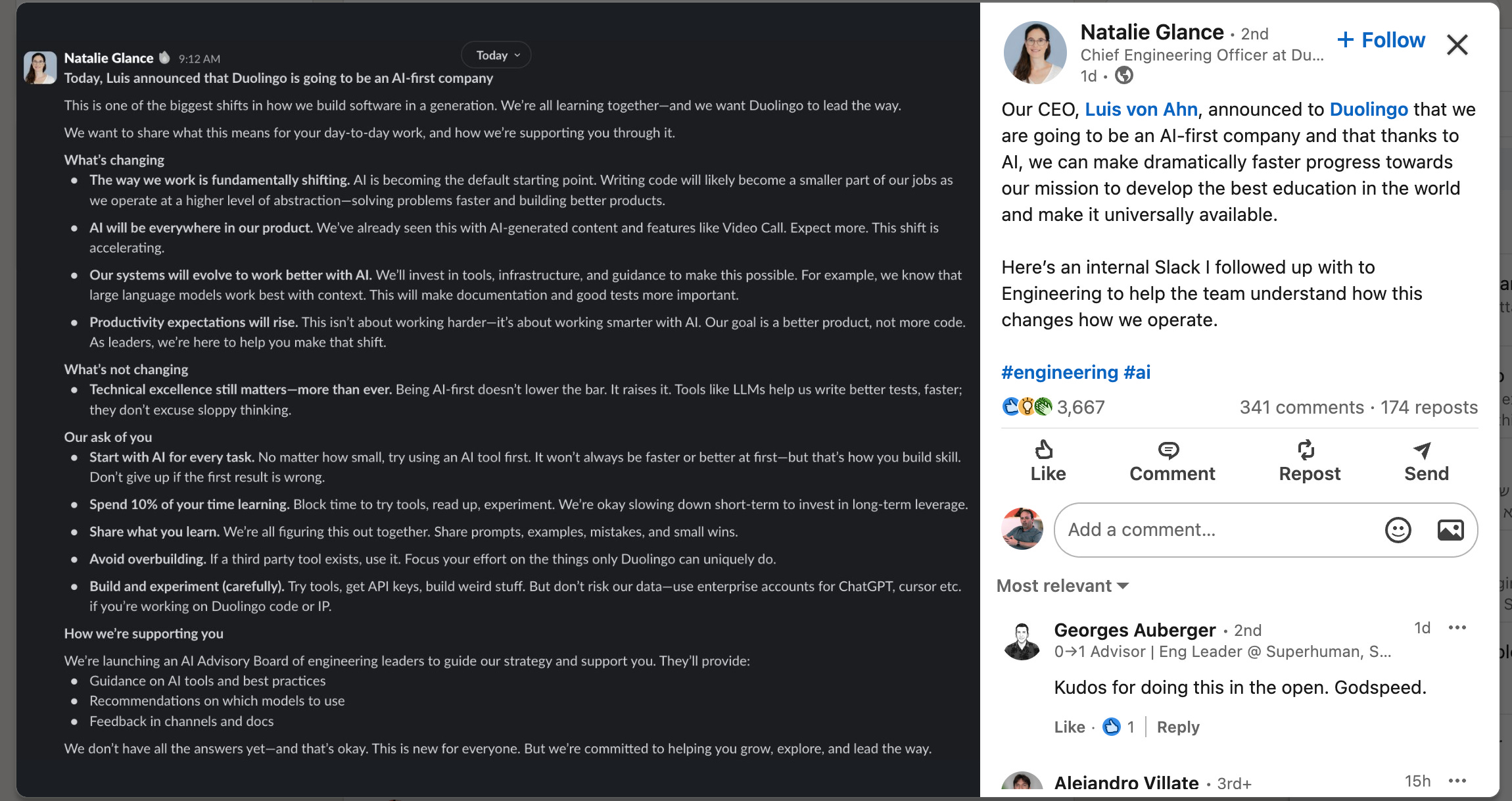
Well, buckle up, because there's a new sheriff in town, and it's called "AI-First." We're seeing this trend pop up everywhere, with companies like Duolingo making headlines about how they're putting AI at the front and center of what they do. But what does "AI-First" actually mean, and is it just another tech fad, or something that changes everything again? Let's break it down without needing a dictionary nearby.
What's a "First" Anyway?
Think of a "First" approach as deciding what (and how) is the most important thing when you're building stuff.
Mobile-First: This meant you started with the smallest screen – your phone. You designed the experience for mobile users first, making sure it was easy to tap, swipe, and use on the go. The phone wasn't just a smaller computer; it had its own superpowers like GPS and cameras, and Mobile-First companies built products that used those superpowers. The reason? Everyone got a smartphone, and they were using it all the time.
AI-First: This is different. It's not about the device; it's about the brain. AI-First means you start by thinking, "How can AI make this product or service smarter, better, or totally different?" You design the core experience around AI capabilities. AI isn't just a feature you bolt on later; it's the main ingredient. The reason? AI got really good, really fast, and it can do things we only dreamed of before, like understanding what you mean when you type naturally or creating new stuff out of thin air.
The big difference? Mobile-First was about where you delivered the experience – the platform. AI-First is about what you deliver – the intelligence itself, and how you build around it.
How Does This Shake Things Up for Everyone?
When you change what's "First," it sends ripples through the whole company, and even affects the folks using the product.
Users:
Mobile-First users wanted things fast and easy on their phones. They expected apps to know where they were and work even if they were walking down the street.
AI-First users expect things to be smart. They want the product to understand them, predict what they need, do annoying tasks for them automatically, and maybe even surprise them with helpful ideas. It's less about tapping buttons and more about conversing or getting things done without asking explicitly.
Product Teams:
Mobile-First teams sweated over making things look perfect on every phone screen size and figuring out how to get people to download the app.
AI-First teams are now focused on data – getting it, cleaning it, and using it to train AI. They're figuring out how to make AI models work, how to handle it when the AI gets something wrong (because it happens!), and how to build features where AI is the core engine.
Go-to-Market (Sales, Marketing and CS):
Mobile-First GTM was all about mobile ads, getting featured in app stores, and showing off how your app worked on a phone.
AI-First GTM is about selling intelligence. You're not selling software; you're selling outcomes powered by AI – like "save 30% on customer support time" or "get personalized recommendations that double sales." It requires explaining what the AI does and building trust.
Engineering Teams:
Mobile-First engineers were the rockstars building slick mobile apps and the APIs that fed them data.
AI-First engineers are now the data scientists, ML engineers, and folks who know how to manage the complex systems that run AI models (sometimes needing fancy hardware like GPUs). They're dealing with different kinds of problems, like making sure AI models are fair and reliable.
Pace of Development:
Mobile-First could be fast if you were just tweaking the design, but the complexities of deploying to the masses across different operating systems and diverse phone models, coupled with platform-specific limitations and the often lengthy app store approval processes, can significantly slow down the rollout.
AI-First can feel super fast when you see what a new model can do in a demo, but actually building a reliable product around AI that works for millions of people? That takes time. It's more about getting the data right and constantly improving the AI brain.
What About the Companies Selling AI to Other Companies?
So, if “everyone” is going AI-First, is that automatically awesome news for the companies that sell AI solutions to big businesses? Well, yes and no.
It's great because suddenly, everyone wants AI! The demand is huge, and companies are ready to spend money on it.
But it's also tricky. Here are a couple of reasons why:
Companies Might Build It Themselves: As AI tools get easier to use and powerful AI models become more available (hello open source!), some big companies might decide, "Hey, we can build this core AI stuff ourselves!" They might rely less on outside vendors for the basic AI parts and just use the raw ingredients.
They Want Solutions, Not Just Tech: Businesses aren't just looking for a fancy AI model. They want something that solves a real problem for them, like "reduce fraud" or "write marketing emails automatically." Companies that just sell the underlying AI technology without packaging it into a solution for a specific business need might find it harder.
So, to stay relevant, Enterprise AI companies need to focus on Deep Vertical Specialization. Instead of trying to be everything to everyone, they should become experts in using AI to solve problems in one specific area or industry. Think AI for healthcare, AI for supply chain, or AI for specific types of financial analysis. They need to combine AI tech with real-world knowledge of a particular business area to offer solutions that companies can't easily build in-house.
The Takeaway
Going AI-First is a big deal. It's not just about putting AI in your product; it's about rethinking how your product works, how your teams operate, and what your customers expect. For companies selling AI, it means huge opportunity, but also the need to get really good at solving specific problems, not just selling general tech.
It's a wild ride, but one where the humans who understand how to work with this new kind of intelligence are definitely still in the driver's seat, building the future